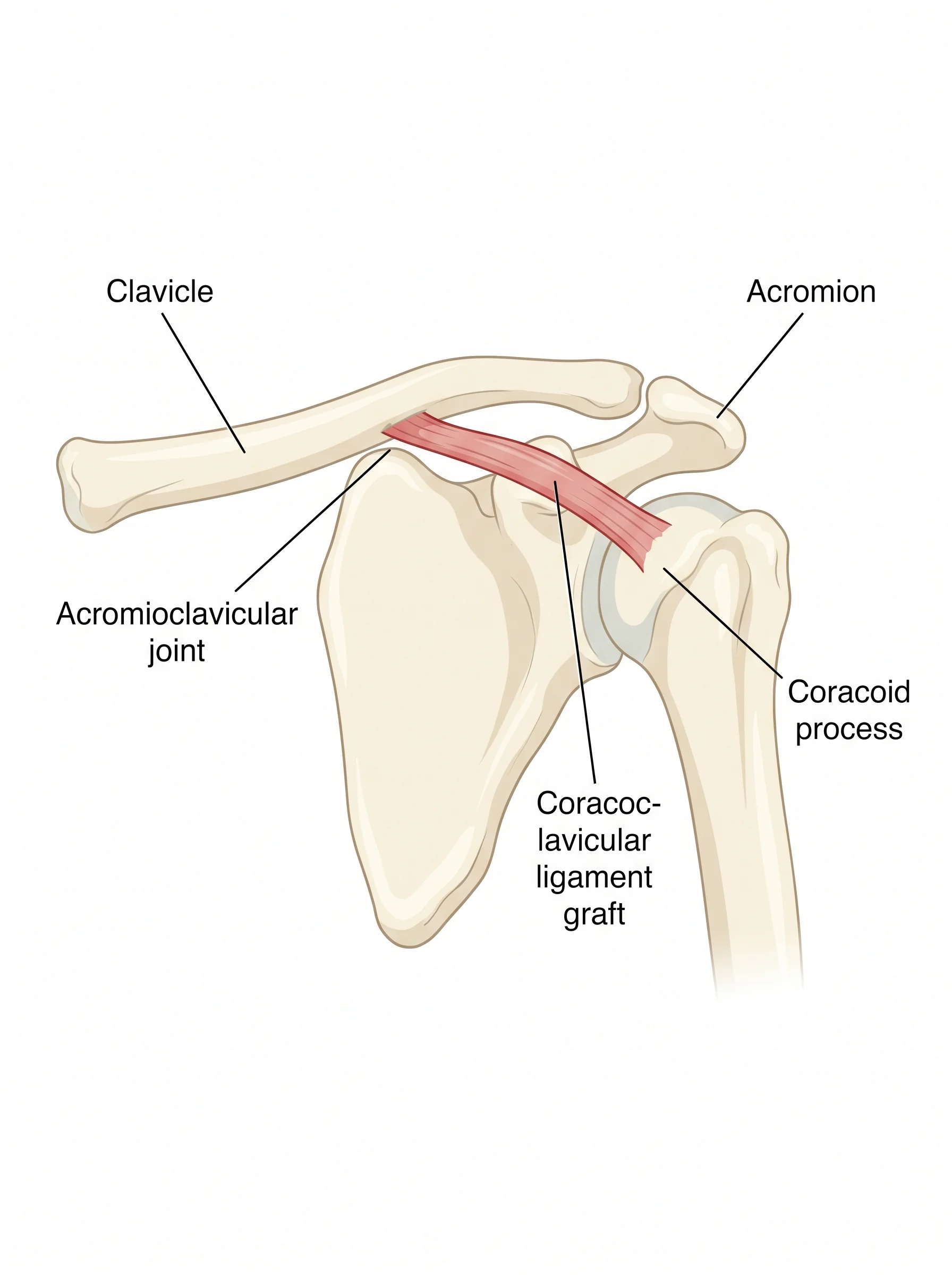
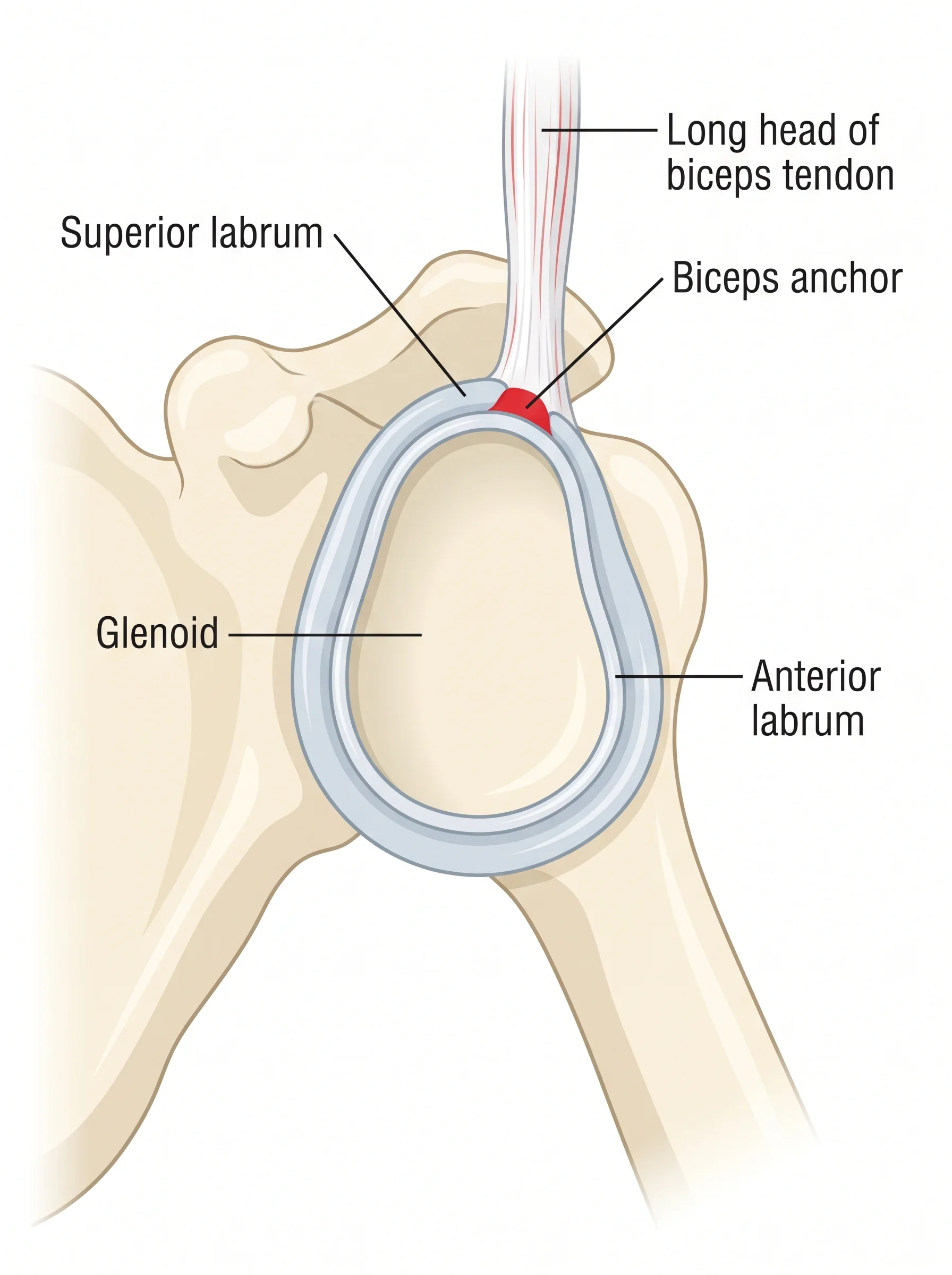
What is an AC joint separation?
The AC joint is the joint at the top of the shoulder where the end of the collarbone (clavicle) meets a part of the shoulder blade called the acromion.
AC stands for acromioclavicular, the two bones that meet there. Ligaments (strong bands that connect bone to bone) hold this joint together. An AC joint separation is an injury that stretches or tears these ligaments, so the collarbone and shoulder blade no longer line up as they should.
This injury usually comes from a direct blow, most often a fall onto the point of the shoulder, common in cycling, contact sports, and slips. AC separations are graded by how badly the ligaments are damaged, from a mild sprain with the bones still aligned, to a complete tear where the collarbone rides up and forms a visible bump on top of the shoulder.
It is important not to confuse an AC joint separation with a shoulder dislocation. A dislocation is the ball slipping out of the main shoulder socket. An AC separation is a different joint entirely, at the top of the shoulder. A specialist can tell them apart.
What are the symptoms of AC Joint Separation, and when should you see a specialist?
People with an AC joint separation usually describe pain right at the top of the shoulder after a fall.
Common signs, in patient words.
- Pain and tenderness at the top of the shoulder, right over the joint. - A bump or step where the collarbone meets the shoulder, in more severe injuries. - Pain when reaching across the body or lifting the arm overhead. - Pain when lying on that shoulder or carrying a bag on it. - A feeling that the joint is loose or out of place.
See a shoulder specialist after a fall onto the shoulder that leaves lasting pain, tenderness at the top of the shoulder, or a visible bump. Seek urgent care if the skin over the bump looks tented or at risk, if there is severe deformity, or if the arm is numb or cold. This section explains the condition; a specialist confirms the grade of the injury, which guides treatment.
How is an AC joint separation diagnosed?
Diagnosis starts with the story of the fall and a physical exam.
Your specialist presses over the AC joint, checks for a step or bump, and tests how the shoulder moves. The location of the pain, right at the top of the shoulder, is an important clue.
X-rays confirm the injury and its grade by showing how far the collarbone has shifted relative to the shoulder blade. Sometimes X-rays are taken in specific positions to show the separation more clearly. Advanced imaging is not usually needed for a typical AC separation. Your specialist uses the exam and X-rays together to grade the injury and plan care.
What is the natural course, and when is the procedure needed?
For most AC separations, the natural course is gradual healing.
Pain is greatest in the first days, eases over the following weeks as the ligaments recover, and motion and strength return with therapy. Milder injuries often leave little more than a small bump that does not affect function. The bump may not fully disappear even after the shoulder works normally again.
When surgery is needed for a severe separation, the general goal is to bring the collarbone back into place and stabilize the joint while the ligaments heal or are reconstructed. The specific technique depends on the injury and the person, and your surgeon will explain the plan and sequence at that time. Because the great majority of separations are managed without surgery, most people follow the natural healing course with guided rehabilitation.
What is the recovery timeline for AC Joint Separation?
Recovery from an AC joint separation is measured by what the shoulder can do, not only by dates.
The general order of milestones for non-surgical care.
- Protect and settle pain. Early on, a sling and pain control let the ligaments start to heal. - Regain motion. As pain eases, you work back to comfortable, full motion. - Rebuild strength. Strengthening restores normal shoulder function. - Return to activity and sport. Return is staged, with contact sports and heavy lifting usually last, once strength and comfort meet the demand.
For a sense of length, many milder AC separations recover over a period of weeks, while more severe injuries take longer, according to general guidance from the American Academy of Orthopaedic Surgeons (AAOS). These are ranges, not promises. Your timeline depends on the grade of the injury, your activity, and rehabilitation. Your team will map it with you.
How should you prepare for the visit or for surgery?
For a condition usually managed without surgery, preparing for the visit helps.
- Note the injury. Record how the fall happened and how the pain has changed. - Bring your questions. Ask about the grade of your injury, what activity is safe, and when you can return to sport. - Wear easy clothing. Loose, front-opening clothes make the exam easier.
If surgery is recommended for a severe injury, your surgeon will give specific preparation steps, including home setup, arranging a ride home after anesthesia, planning time off work, and having someone available for the first days.
Which warning signs should you call about?
Most AC separations heal without trouble, but some signs need a call.
Contact your specialist's office if you notice the following.
- Skin over the bump that looks stretched, pale, or at risk of breaking down. - Pain that suddenly becomes severe or very different from before. - New numbness, tingling, or a hand that looks pale or feels cold. - If you have had surgery: fever, spreading redness, or drainage from an incision. - Calf pain or swelling, chest pain, or shortness of breath. These need urgent attention and may mean calling emergency services rather than the office.
When in doubt, call the office.
What results can you expect from AC Joint Separation?
Most people with an AC joint separation recover good, comfortable shoulder function, and the majority do so without surgery.
According to general guidance from the American Academy of Orthopaedic Surgeons (AAOS), most AC separations heal well with non-surgical care, and a visible bump may remain even after full function returns. Severe injuries treated with surgery also generally recover well. These are general findings and ranges, not promises for any one person. Your specialist can explain what to expect based on the grade of your injury.
What are the treatment options?
- 01Rest and a slingA sling supports the arm and eases pain in the first days to weeks while the ligaments begin to heal.
- 02Ice and anti-inflammatory medicineIce and over-the-counter medicine help with pain and swelling early on. Use medicine as directed and check with your specialist about other conditions.
- 03Physical therapyOnce pain settles, guided exercises restore motion and strengthen the shoulder so it works normally again. This is a key part of recovery, even for injuries that never need surgery.
- 04Gradual return to activityYou return to sport and heavier tasks in steps as comfort and strength allow.
What do patients ask most?
Will the bump on my shoulder go away?+
Is an AC separation the same as a dislocated shoulder?+
Do I need surgery?+
When can I return to sports?+
Education and training
Medical school at Albert Einstein College of Medicine. Residency at NYU Hospital for Joint Diseases. Fellowship at Kerlan-Jobe Orthopaedic Clinic.
- FellowshipKerlan-Jobe Orthopaedic ClinicSports medicine
- ResidencyNYU Hospital for Joint DiseasesOrthopedic surgery residency
- Medical schoolAlbert Einstein College of MedicineDoctor of Medicine
- Board statusAmerican Board of Orthopaedic SurgeryBoard certified
DOCS Health
DOCS Satellite Westlake
696 Hampshire Rd
Suite 100 / Suite 180, Westlake Village, CA 91361
Phone(844) 529-0911